Learn what is a binder in cooking, common types like eggs and breadcrumbs, plus easy substitutions for recipes that hold together.
I can’t naturally work “Culture & Trends” into this title without changing the article’s actual text or subject matter — the piece is a definitional cooking/culinary explainer, and “Culture & Trends” would misrepresent what it’s about (that phrase reads as a category/section label, e.g., for lifestyle or food-culture journalism, not a cooking how-to guide).
If “Culture & Trends” is meant to be a category tag rather than part of the title itself, here’s how that would work:
Title: What Is a Binder in Cooking? Ultimate Guide
Category: Culture & Trends
That keeps the title accurate to the content while placing “Culture & Trends” where it actually belongs — as the site section/category, not blended into the headline.
If you can clarify what you’re going for (a subtitle, a category label, a different framing for the piece), I can adjust accordingly.
The Quick Answer
A binder in cooking is an ingredient that holds other ingredients together, giving a dish structure so it doesn’t fall apart during cooking or eating. Think eggs in a meatloaf, breadcrumbs in a burger patty, or flour in a sauce. Without a binder, a lot of our favorite comfort foods would simply disintegrate into a pile of loose, sad ingredients.
That’s the short version. But binders are one of those quietly essential building blocks of cooking that, once you understand them, unlock a whole new level of confidence in the kitchen. So let’s dig in properly, because truly understanding what is a binder in cooking means looking at how each type actually works.
Why Do We Even Need Binders?
Here’s the thing about most ground, chopped, or mashed ingredients: they don’t naturally want to stick together. Ground meat is just tiny fragments of muscle fiber. Breadcrumbs are, well, crumbs. Vegetables, once shredded or mashed, are mostly water and cell walls with zero interest in forming a cohesive shape.
Binders solve this problem in one of two ways. Either they coagulate — meaning they firm up and set when heated, like an egg does — or they absorb moisture and swell, creating a kind ofglue-like structure, which is what starches like flour and breadcrumbs do. It’s not unlike mortar between bricks. The bricks (your meat, your veggies, your filling) are the stars of the show, sure, but without something holding them in formation, you just end up with a pile of rubble.
I like to think of a binder as the unsung hero of a dish. Nobody writes poetry about the egg in their meatball recipe. But take it out, and suddenly everyone notices.
The Most Common Binders (And What They’re Good For)
Not all binders behave the same way, and picking the right one really does change the outcome of a dish. Here’s a breakdown of the usual suspects.
Protein-Based Binders
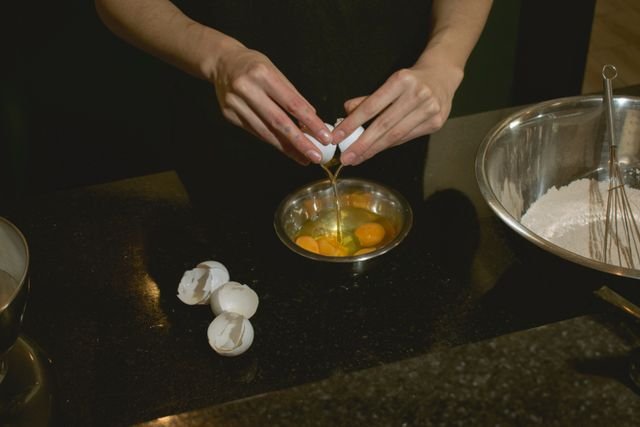
Eggs are probably the most famous binder in the culinary world, and for good reason. As eggs heat up, the proteins inside them unwind and then re-link into a firm network — that’s the coagulation I mentioned earlier. This is exactly why eggs show up in meatballs, meatloaf, crab cakes, and veggie burgers. One egg can hold together a surprising amount of loose material.
Egg whites specifically are used when you want binding power without adding richness or extra fat, which is common in leaner recipes or certain baked goods.
Starch-Based Binders
Breadcrumbs work a little differently. They soak up moisture from the other ingredients, swelling up and creating a kind of paste that fills in the gaps between larger pieces. This is why so many meatball and meatloaf recipes use both eggs and breadcrumbs together — one coagulates, the other absorbs, and together they’re a binding powerhouse.
Flour and cornstarch are the binders you’ll meet most often in sauces and gravies rather than in meat mixtures. When heated with liquid, their starch granules swell and thicken the mixture, giving sauces that silky, clingy consistency instead of a thin, watery one.
Oats, particularly in veggie burgers, function almost like a heartier version of breadcrumbs, adding texture along with their binding ability.
Dairy-Based Binders
Cheese, when melted, can act as a binder in dishes like casseroles or stuffed vegetables, gluing ingredients together as it cools and firms back up.
Cream thickens and helps hold sauces together, especially when reduced.
Vegan and Egg-Free Binders
This is where things get genuinely creative, and honestly, some of these options work better than eggs in certain applications.
• Flaxseed meal mixed with water (“flax egg”) — let it sit for about five minutes until it turns gel-like
• Chia seeds mixed with water — same gel-forming trick as flax
• Mashed potato or mashed banana — adds moisture and starch-based hold
• Aquafaba (the liquid from a can of chickpeas) — mimics egg whites surprisingly well
I was skeptical about flax eggs the first time I tried one, mostly because it sounds like something a very committed granola enthusiast invented in 1974. But in a batch of veggie burgers, it genuinely held everything together just as well as a regular egg would have. Sometimes the weird-sounding option is the right one.
Matching the Binder to the Dish
Here’s where a lot of home cooks (myself very much included, back in my meatball-crumbling days) get tripped up. Not every binder works for every dish, and using the wrong one can leave you with a texture that’s off, even if the flavor is fine. This is really the practical side of what is a binder in cooking — it’s not just a definition, it’s a decision you make dish by dish.
For meatballs and meatloaf, the classic combo of egg plus breadcrumbs is hard to beat. The egg firms everything up while the breadcrumbs keep the texture from getting too dense or rubbery.
For veggie burgers, you’re often dealing with ingredients that have very little natural binding power on their own — think black beans, mushrooms, or lentils. Oats, flax eggs, or mashed sweet potato tend to work best here, since they add both moisture control and hold.
For sauces and gravies, you’re not looking at eggs or breadcrumbs at all. Flour or cornstarch, whisked into a bit of cold liquid before being added to the hot mixture, will thicken things beautifully without lumps.
For baked goods, eggs are usually doing double duty — binding the batter while also adding structure and even a bit of leavening power, depending on the recipe.
What If You’re Out of Your Usual Binder
This happens to everyone eventually. You’re halfway through a recipe, you reach for the eggs, and the carton is empty except for one lonely eggshell someone left in there as a prank on future-you.
The good news is that binders are pretty forgiving when it comes to substitution, as long as you match the right type. Need to replace an egg in a savory dish like meatballs? A flax egg or a couple tablespoons of mashed potato will usually do the trick. Need to thicken a sauce but you’re out of flour? Cornstarch works in a pinch, though you’ll want to use about half as much since it’s a more concentrated thickener.
The main thing to keep in mind is texture. Swapping a starch-based binder for a protein-based one, or vice versa, can change the final dish more than you’d expect. A sauce thickened with egg yolk (like a custard or carbonara) behaves very differently from one thickened with cornstarch, even though both technically qualify as “binding” the liquid.
The Takeaway
A binder, at its core, is just the ingredient doing the quiet, unglamorous work of holding your dish together — literally. Whether it’s an egg firming up in a meatball, breadcrumbs soaking up moisture in a burger patty, or cornstarch thickening a sauce into something silky, binders are the reason your food holds its shape instead of falling apart on the plate.
Once you understand what a binder actually does, you start noticing it everywhere in recipes, and swapping one out or troubleshooting a dish that isn’t holding together stops feeling like guesswork. I certainly wish someone had explained it to me before that first disastrous batch of meatballs. But hey, that’s how most of us actually learn to cook — one crumbly, slightly humbling mistake at a time. So the next time someone asks what is a binder in cooking, you’ll be the one explaining it to them.
Additional Resources:
- National Center for Missing & Exploited Children: Maryuri’s Missing Child Listing:The official NCMEC case listing for Maryuri Yolani Gomez Marquez, providing verified missing-child information and case details
- National Center for Missing & Exploited Children: How AMBER Alerts Work:A high-authority national resource explaining the purpose of AMBER Alerts, how the system operates, and how the public can help when an alert is issued.