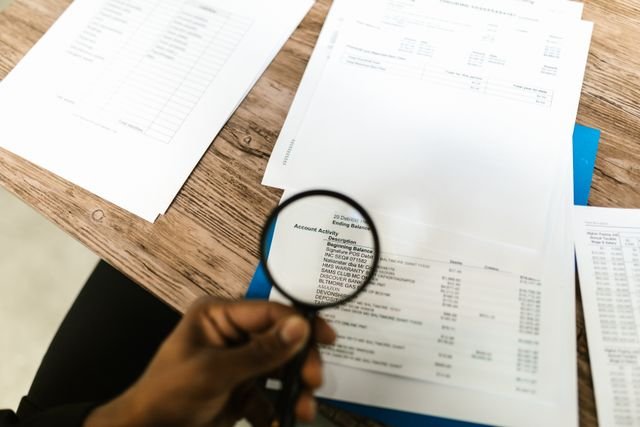
“Is John Doe really married to Jane Smith? We dug through public records to find the truth. Read the full story here.”
Filed under: Culture & Trends
Just how much information do I know there, all by doing a bit of digging into public records? Here’s my report.
Full disclosure: the very first time I poked around in public records, I didn’t know the rabbit hole I was walking into.
It was all very innocent– I was trying to reconnect with an old college roommate, and typed her name into a search bar. Instead of immediately being taken to her Facebook page, I was brought to a site which read something like “Jane Smith appears to be married to John Doe.”
My first thought was ah what?! My second thought was okay I really want to figure out how these sites make these predictions. This led to my fascination with reading behind the auto-generated profile pages. And here we are.
How These Sites Actually Make These Claims
Here’s the truth that no one will tell you in advance: when a people-search site claims that an individual is “probably” married to another, it’s not hearsay, and it’s of course not a Ouija board. It’s some good ol’ fashioned unglamorous records-based quantification.
This website has pulled marriage records, property deeds, voter registrations and addresses, then inputted the data into an algorithm which delivers a probability score, 50-50 or higher.
Imagine a murder-mystery detective board, if you will; the warning bulletin boards and now-hysterical red threads connecting pictures of the suspect and deposed witnesses. Now imagine a server somewhere doing statistics at a scale, not the world’s smallest murder mystery, but whether someone married someone else in 2016. I know when I finally realized what this really meant.
A Family Tree Project That Taught Me a Lesson
I was helping my cousin research a distant relative for a family tree project when we found two different people with the same phrase “likely married” following their names. Both seemed like close matches to each other, so we just committed by assuming only yeses remained, and the results we could trust. But the algorithm actually found two people with the same last name, lived in the same zip code, and were born within ten years of each other.
Not being married, but siblings. That experience taught me more than any online article on genealogical algorithms ever did, so I want to share it with you now.
The Anatomy of a “Likely Married” Claim
To clarify any of these profile pages: in looking at such page, a claim usually comprise several components: “shared surname” the least reliable indication by itself is the most elementary.
Shared address history, (a A lot stronger signal, in that it persists across years).
Official documents filed together examples include records of ownership like title deeds, official tax returns, and registration of businesses bearing both names.
Age-appropriate range algorithms tend to check for individuals within a reasonable marriage age difference Timing coincidence records that list both names at the same address during approximately the same dates.
None of these is proof in and of itself.
It’s more like a recipe. The mere presence of any single one of these isn’t enough, but when combined it’s closer and closer to the real answer. And close is a relative term. I’ve seen these tools nail it on the head more than a few times and I’ve seen them totally miss because two users happened to have had the same mailbox at the same place years apart.
Why Common Names Make This So Much Trickier
Let’s try an analogy, because I think it actually makes sense. So you want to find a single grain of sand on a beach, only somehow the sand is populated, to exactly the same degree, in every other beach in the world, and half of the grains are also called “Smith.”
This is very much what we face with common names: as they get more frequent, the “likely”s claim becomes even less certain, because the algorithm has a far more expansive set of candidates to choose from, and onward false positives start coming thick and fast.
This is essentially where disambiguation really kicks in, and quite frankly the number one thing that most people skimp over.
How I Verify These Claims Myself
When I was trying to verify any of these myself I don’t simply accept the headline statement. I look down to the secondary details: middle names, ranges of approximate age, city and state histories, as well as known aliases/maiden names.
It’s a pain to do, I admit… it isn’t every Friday night, but it is the line that divides a good match from a big screw up.
A Story About a Business Partnership Background Check
Share a quick story because I think it’s more effective than any list of benefits. A friend of mine was researching the background of a potential business partner and one of these services flagged a “likely married to” hit for another party that sent alarm bells ringing. Of course she was a little afraid.
But rather than assume the worst we sat down and cross-checked the official public record that was behind the hit. It was an old record (created more than ten years before, connected to a different society and occasion), and was because of this truly irrelevant. The takeaway: these tools can warn us of trouble, but they cannot fix it.
Responsible Way to Use This Information
If you’ve come across one of these “possibly married” websites through one of your relatives or friends, here’s my trusted method:
See it as a hint rather than the final truth.
The ‘Confidence’ labels (like “likely”) indicate that a ‘100% sure platform’ is not.
Final Thoughts
Really, a statement like “X is probably married to Y” is, in part, a very impressive but flawed technique, which generates these outputs. The data behind this is naturally of high standard, yet there are real gaps and a fair chance of misrepresentation.
My personal experience in this area, from my initial random search through an old roommate’s family tree and my eventual appointment as the family expert by my relatives whenever we get a genealogy problem which has no way out – taught me one thing: curiosity is good, but verification is essential.
So, the next time you see one of these messages in your search results, regard it as one more way that I discovered after getting fed up with misleading and exaggerated claims: quite interesting, worth checking out once again, but nothing more than the last word.
Additional Resources:
- FTC: Recommends Congress Require Data Broker Industry to Be More Transparent: The FTC’s own industry study found that data brokers operate with a fundamental lack of transparency, and named the specific companies it examined for people-search products.
- FTC: Data Brokers Settle FCRA Charges Over Inaccurate Consumer Reports: The FTC charged that InfoTrack provided inaccurate information suggesting job applicants were registered sex offenders — a real example of how false “likely” matches can hurt real people.