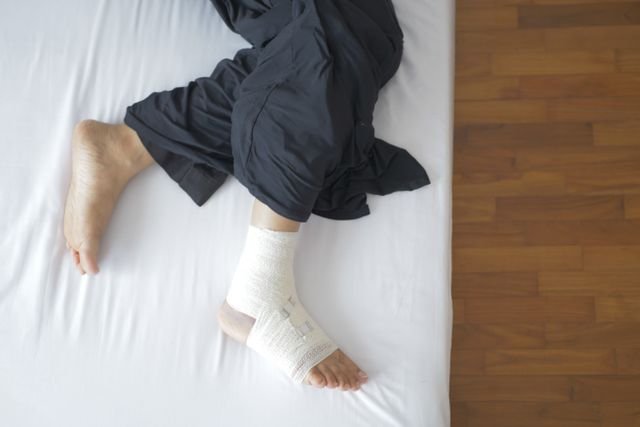
Toenail Removal Healing Stages Pictures & Warning Signs
Explore toenail removal healing stages pictures from day one to full regrowth, plus aftercare tips and warning signs to watch for.
Curious about how your wound should look and heal after you get your toenail taken off? Follow the journey, from day one to regrowth, with photo recommendations, wound care tips, and signs of infection, all in line with today’s Culture & Trends around open, honest conversations about foot health and self-care.
As I finally peeked at my toe with the bandage removed, I definitely swore. It looked odd, raw, and unrecognizable. My very first action? I opened my phone and googled “toenail removal healing stages images” at a time when most sane people aren’t awake.
If you’re reading this, you’re likely in the same boat. Maybe you’ve already gotten that nail removed, perhaps it’s next week, or perhaps you’re squinting at your foot, trying to determine if that color is, in fact, ok. Take a deep breath. I’ve been there, and this post will guide you through every step of what’s to come, just as I wish someone had guided me.
Quick note: sharing my own experience and some general info here. I am not a doctor. Your podiatrist’s advice is still what wins.
Toenail Removal Healing Stages at a Glance
Quick note before we get started. Timelines depend on each individual, so these are intended only as a rough guideline.
Stage
Typical Timeframe
What You’ll See
Immediately after
Day 0-3
Bandaged toe tenderness light bleeding
Early healing
Days 4-14
Crust or scab, mild swelling, pinkness
Bed closing up
Weeks 2-6
Skin toughening, tenderness fading
Early regrowth
Months 2-4
A sliver of healthy new nail of a clear or whitish color that is a little thin.
Full regrowth
6-12+ months
Nail slowly reaches the tip, often changed in texture.
[Photo idea: montage of the same toe at the different stages, marked, and identified by day or week.]
Why Do People Get a Toenail Removed Anyway?
So my own weakness was an ingrown nail that had been mad at me for months, a poorly timed walking stint. I avoided the appointment, like I avoid almost everything that means I have to go to a doctor. Until the walk was so painful I may as well have been walking on Lego.
Other typical causes are fungal infections, injuries (such as dropping a dumbbell on your toe or stubbed fingers) and nails that grow in painfully into the flesh. Sometimes, you get all or some of the nail cut off, and with certain kinds, they also destroy the nail root so it doesn’t recur. You’ll want to know, which it was, since it affects your healing time.
Stage 1: The First 72 Hours (Day 0-3)
[Image caption: new bandage on a toe: nail bed after the first dressing change.]
The one thing I didn’t expect was how soon the numbing wore off. It wears off so fast it’s almost like someone flipped the movie theater lights on when you’re in the middle of watching it. One second you’re comfortable and the next you’re hyper-aware of your toe.
What’s normal:
Throbbing or aching pain, in particular when your foot is hanging down.
Some blood leaking through the bandage.
Swelling and redness around the toe
An irritated shiny yellowed nail bed
What to do now:
Elevate your foot above your heart whenever possible. I lived on the couch with three pillows stacked under my ankle.
Hold the dressing dry and keep it in place for the amount of time your doctor told you to.
Follow all dosing instructions when taking pain relief.
Don’t walk far. Toe’s got a holiday.
Stage 2: The scab forms and the wound begins to heal (Day 4-14)
[Photo idea: toe at about day 7. Dry scab or crust with some light pink skin around it]
This is where I slightly panicked. The nail bed was crusting and darkening, so my reaction was ‘infection!’ Nope. A scab or yellow-brown crust is your body’s bandage just as much as the plastic covering that kicks in if you scrape your knee.
What’s normal:
Dry crust or scab on the nail bed.
Small quantity of transparent or slightly yellow fluid.
Mild swelling that gradually shrinks
Sore to touch at the toe
What to do now:
Follow your doctor’s advice on soaking and dressing. Not everyone is told to soak in warm water and change dressings every day, but most are.
Don’t pick the scab. I know you want to. Resist.
Wear open or “roomy” shoes. I did find that I became best friends with a pair of sandals, though it was almost winter.
Stage 3: The Nail Bed Settles Down (Week 2-6)
[Photo please: toe at week 3 or 4, with the tough, smooth skin where the nail was.]
At about week three, something wonderful occurred. I totally forgot about my toe for a whole afternoon. That’s a good sign you’ve turned a corner.
The skin covering the nail bed slowly becomes tougher, the scab will naturally fall off, and your soreness will disappear. It’s still sore and sensitive, so tight shoes are out, but you will probably be able to see yourself as a person again.
What’s normal:
Pink, shiny, and plump skin
You will feel some tenderness if you hit the toe.
Dry skin or peeling on the edges
What to do now:
Maintain a clean and moist area, as directed by your provider.
Start exercising again gradually.
Avoid stubbed toes. A stubbing here still smarts, but it’s a very different sensation.
Stage 4: The First Signs of Regrowth (Month 2-4)
[Suggested image: the edge of a new, semi transparent and smooth nail emerging from the cuticle.]
If the nail root was treated, regrowth may not occur, which is normal. If the root was not treated, a thin, clear, or whitish strip will begin to emerge from the base of the toe. This appears as a small crescent, similar to fingernail polish, but not yet fully formed.
This new nail can be a little uneven, ridged, and a little thick. Be gentle! It’s new and still getting used to life.
Stage 5: Full Regrowth (6-12+ Months)
[Photo tip: the same toe at 6 months and 12 months, from the same angle]
This takes time. Toenails grow at an extremely slow rateaveraging about a millimeter a monthso complete regrowth may take a year or even longer. In my case, it took almost a year, and during that time my nail appeared uneven, wavy, and bumpy, and it did not look the way I wanted.
The new nail might grow back thicker, a little curved or the surface might be smooth or bumpy compared to the original. At other times it’s almost perfect. Either of these is normal.
Normal Healing vs. Warning Signs
This is what originally lured me into the internet rabbit hole so let’s make it super crystal clear.
Usually normal:
Varying degrees of redness and swelling that go away over time.
Clear or pale yellow fluid during the first days.
A hard, dry scab that covers the nail bed entirely.
Pain that diminishes instead of increases
Call your doctor if you notice:
Spread of redness or red streaks along toe or foot.
Thick, cloudy, or greenish pus, or the pus has an odour of faeces.
Pain that worsens a few days after you first experience it.
Fever or chills
Uncontrollable bleeding that continues despite firm pressure.
Feeling of warmth, progressing swelling, or a toe that appears more black than anticipated.
My standard: things should get better as time goes on. If your toe is getting madder instead of better, ask. Nobody has ever been reprimanded for inquiring.
Tips That Genuinely Helped Me Heal
Raise it up and keep it up as much as possible. It reduces swelling better than anything I tried.
Use comfortable shoes. Wide-toe shoes and open-toe styles help protect the area while it heals.
Document your progress with dated pictures. Take a picture every couple of days in the same light. It was the one thing I did that gave me a real time frame to compare with, and it’s just what I was looking for online.
Follow up. I thought it was a pain but my podiatrist saw stuff I didn’t.
Be patient. Healing a toe is a marathon in a sprinter’s costume.
Frequently Asked Questions
How quickly do you heal after a toenail removal? The skin and nail bed will usually resolve within a few weeks but it may take 6 to 12 months or longer for the nail to regrow.
You may notice a faint smell from the bandage, which is normal. Though, a foul odor or bad smell may be a sign of infection. Do call your doctor if in doubt.
When can I shower or wear shoes like I used to? Your post-operative care will be particular to the procedure you had done, so follow your surgeon’s advice. Most patients are able to wear wide shoes within a matter of weeks but are unable to wear narrow shoes for even longer.
Will my toenail grow back? Occasionally, a toenail will grow back to its original form but often it will have a different shape and look to it. If you have had the nail root removed it will not grow back.
Final Thoughts
Thinking about it now, the worst part of the toenail removal wasn’t the removal itself and it definitely wasn’t the pain. It was the not knowing. Every tiny new bit was a puzzle until I figured out the pattern: sore scabby settled, gradually regrowing.
So your toe might look a little gnarly today and you’d be right on track. Keep it clean, keep it covered, keep snapping pics and keep the faith. And if in doubt, follow your gut and give the doc a call.
No worries, your toe will heal. Mine did and I don’t even think about it anymore, not until I sit down to write an article like this one.
Read this article in: Disclaimer This article is for general guidance only and is based on individual experience. It is not intended to replace any advice or other information provided by your doctor. Always adhere to the guidance given by your doctor.
Additional Resources:
Toenail or Fingernail Avulsion: Care Instructions (Kaiser Permanente) :Covers home care steps, healing time, and how long a nail takes to regrow.Explore toenail removal healing stages pictures from day one to full regrowth, plus aftercare tips and warning signs to watch for.
Ingrown Toenails: Signs, Causes, Treatment & Prevention (Cleveland Clinic):Explains partial and complete nail avulsion and what to expect afterward.